The cholesterol-first food & lab tracker
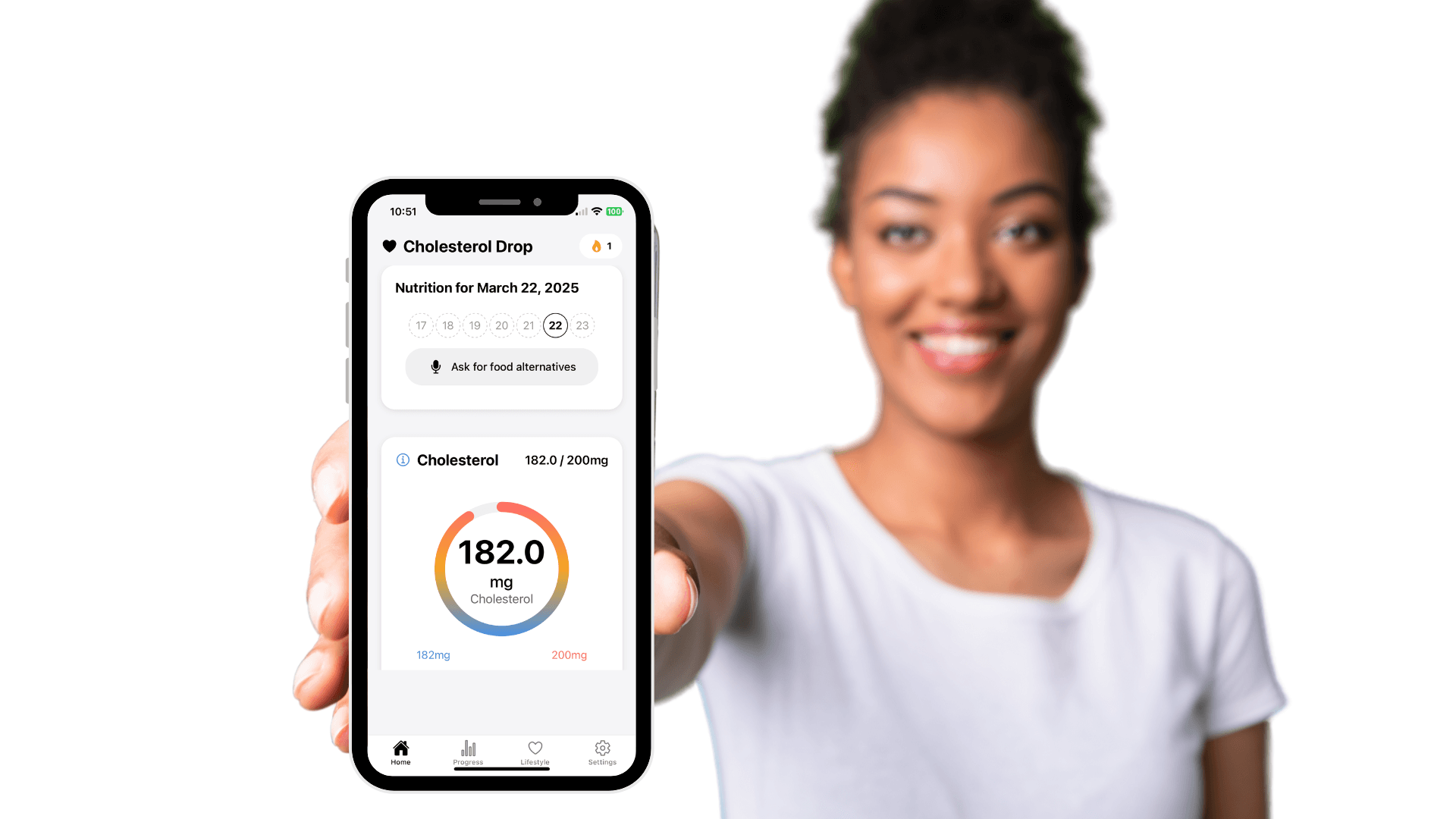
Most food apps count calories. Cholesterol Drop tracks the two numbers that actually move LDL: saturated fat and soluble fiber. Add your lab results and you can see real progress before your next blood test.
Works alongside your doctor. Bring your trends to your next appointment.
5–10%
typical LDL reduction from daily psyllium husk in meta-analyses
20–30%
LDL reductions seen with combined dietary approaches in studies
6–12 weeks
how quickly diet changes typically show up in your blood work
Everything in the app exists to answer one question: is what I did today moving my LDL in the right direction?
Daily gauges for saturated fat, soluble fiber, sodium, and dietary cholesterol: the numbers that matter for your lipid panel, not just calories.
Point your camera at any meal or barcode and AI logs it in seconds, with no tedious database searches or portion guessing.
Log your blood test results and see your trend over time, plus a forecast of where your LDL is heading before your next test.
Craving pizza or burgers? Get delicious lower-saturated-fat versions of the foods you love, with step-by-step cooking guides.
Ask anything, like "is this restaurant meal okay?" or "why is my fiber low?", and get instant, personalized answers from your in-app coach.
Chat with others managing cholesterol and heart health, swap wins, questions, and encouragement, all inside the app. No more hopping from one Facebook group to the next.
Walk into your next appointment with a clean summary of your diet, habits, and lab trends, and have a better conversation about your options.
Doctors often give you three months to try lifestyle changes before re-testing. Cholesterol Drop is built around exactly that window.
Enter your latest cholesterol panel (LDL, HDL, triglycerides, even ApoB) so the app knows your baseline.
Snap photos of meals and keep saturated fat low and soluble fiber high with simple daily gauges and personalized recipes.
After 6–12 weeks, get a new blood test and log it. Watch your trend line move, and bring the data to your doctor.
Lowering cholesterol doesn't mean a lifetime of plain salad. The app suggests heart-healthy versions of the foods you actually crave.
Cauliflower or whole-grain crust, lighter cheese, olive oil. The saturated fat drops without losing the pizza night.
Lean turkey or a bean-based patty with avocado on a whole-grain bun: more fiber, a fraction of the saturated fat.
Olive-oil based sauces, whole-wheat noodles, and veggie-forward plates that keep dinner satisfying and LDL-friendly.
The two levers with the strongest evidence are cutting saturated fat (roughly under 10–15g per day) and raising soluble fiber (oats, psyllium husk, beans, fruit). Add regular exercise, weight management, and plant sterols, and many people see meaningful LDL reductions in 6–12 weeks. Cholesterol Drop tracks all of these daily so you know you're actually hitting the targets. Always work with your doctor, especially if you've been prescribed medication.
Diet changes typically show up in blood work within 6–12 weeks. That's why doctors often suggest a 3-month lifestyle window before re-testing. Cholesterol Drop is built around that retest cycle: log your labs, follow your daily targets, and watch your projected LDL trend ahead of your next test.
Foods rich in soluble fiber lead the list: oats and oat bran (beta-glucan), psyllium husk, beans and lentils, apples, and barley. Nuts, olive oil, fatty fish, and foods fortified with plant sterols also help, mainly by replacing saturated fats like butter, fatty red meat, and full-fat dairy.
It varies by person and starting point. Meta-analyses show psyllium alone can lower LDL by roughly 5–10%, oat beta-glucan around 5–7%, and plant sterols 8–10%. Combined dietary approaches (like the Portfolio Diet) have shown LDL reductions of 20–30% in studies, comparable to a low-dose statin for some people. Genetics matter too, which is why tracking your own lab results is essential.
No. Cholesterol Drop is a lifestyle and nutrition tracking tool, not a medical device, and it doesn't provide medical advice. Whether you need medication depends on your overall cardiovascular risk, which only your doctor can assess. Never stop or change a prescribed medication without your doctor. The app helps you make the most of the lifestyle side, and gives you clean data to bring to your appointments.
General calorie trackers bury saturated fat and fiber behind premium tiers and treat them as afterthoughts. Cholesterol Drop puts the numbers that move LDL front and center: saturated fat, soluble fiber, sodium, and dietary cholesterol. It adds lab tracking, LDL trend forecasting, a doctor-visit prep summary, and a built-in community of people working on the same goal, none of which you'll find in a generic food logger.
Start tracking the numbers that matter today, and walk into your next appointment with proof of progress.
Download on the App Store